
Keypoints
– Recommended Timelines: Standard residential properties should undergo a professional electrical safety inspection every 3 to 5 years, while homes over 40 years old benefit from checks every 1 to 3 years.
– Beyond Visual Checks: A comprehensive electrical safety audit evaluates main service panels, terminal torque, grounding systems, branch circuits, and outlets using specialized diagnostic equipment.
– Critical Trigger Events: Purchasing a new home, adding major heavy-draw appliances, or planning renovations require immediate electrical safety inspections.
– Insurance & Transaction Protection: Specialized electrical audits by licensed C-10 contractors satisfy strict California home insurance underwriting and protect buyers from costly post-sale surprises.
– Preventive Savings: Catching loose terminals, thermal hot spots, and insulation wear early prevents catastrophic panel failures and costly emergency repairs.
Introduction
Think about how you look after your home throughout the year. You probably swap out your HVAC air filters every few months, clear out the rain gutters before winter storms roll through, and schedule tune-ups for your air conditioner before summer hits. Yet the most critical system in your house, the electrical framework, operates quietly out of sight behind your walls, often running for decades without a single checkup.
Because wires and junction boxes stay hidden behind plaster and drywall, it is easy to figure that as long as the lights turn on, everything is working fine. But electrical components experience real wear and tear over time. Every time current flows through a wire, it generates subtle thermal expansion and mechanical stress that can loosen connections and age insulation.
At Pro Electric Services Inc., our approach starts with education. Knowing how often to schedule a home electrical safety inspection in Glendora, what a proper audit actually covers, and why routine checkups matter gives you genuine confidence that your property stays safe, reliable, and up to code.
How Often Should You Have Your Home Electrical System Inspected?
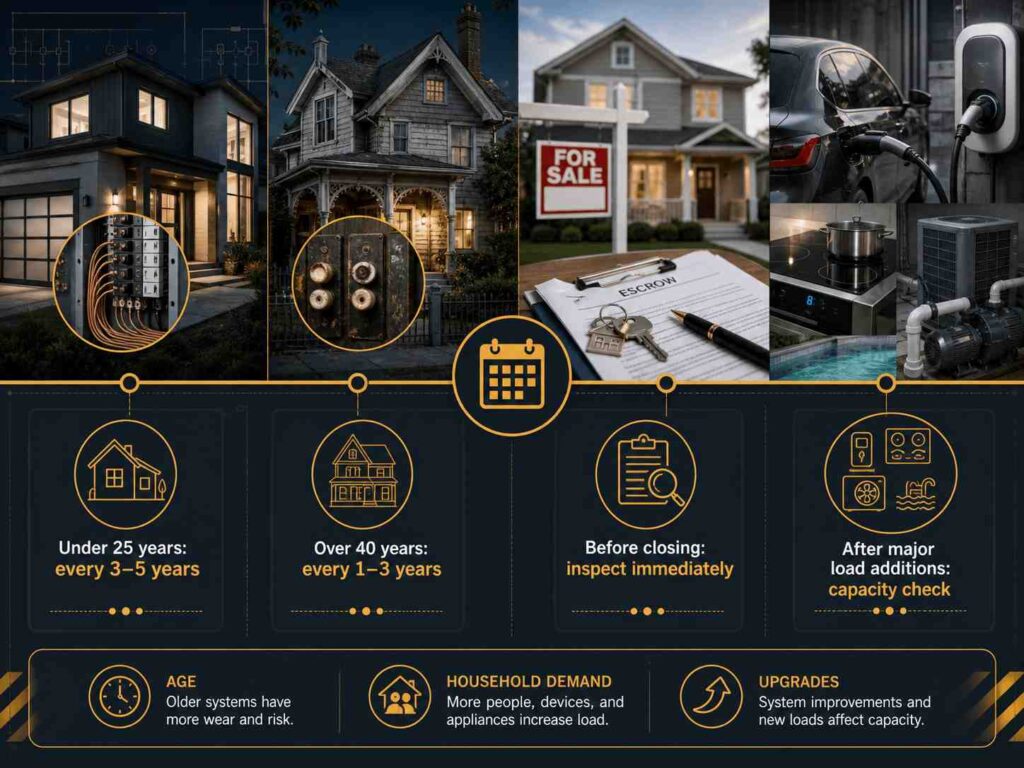
How frequently you need an electrical safety check depends mostly on the age of your property, how much power your household pulls, and any recent upgrades you have made. Here is a practical breakdown for local homeowners:
- Standard Homes (Under 25 Years Old): Every 3 to 5 years. Homes built after 2000 feature modern copper wiring, dedicated grounding circuits, and safer panel designs. Even so, terminal screws can still back out over time due to routine heating and cooling cycles.
- Established & Historic Homes (Over 40 Years Old): Every 1 to 3 years. Properties built before 1980 often have aging cloth insulation, single-strand aluminum branch wiring, or original panelboards that need regular eyes on them to catch wear early.
- Pre-Purchase Property Transfers: Immediately before closing. Standard home inspectors perform general visual checks, but they do not disassemble main panels or run load tests. A dedicated pre-purchase electrical inspection protects your wallet before you sign off on escrow.
- After Adding Major Appliances or Tech: Whenever you increase your power load. Putting in a Level 2 electric vehicle charger, an induction cooktop, a central HVAC system, or a backyard pool pump changes your overall electrical demand and calls for a quick capacity check.
What Exactly Happens During a Professional Electrical Safety Inspection?
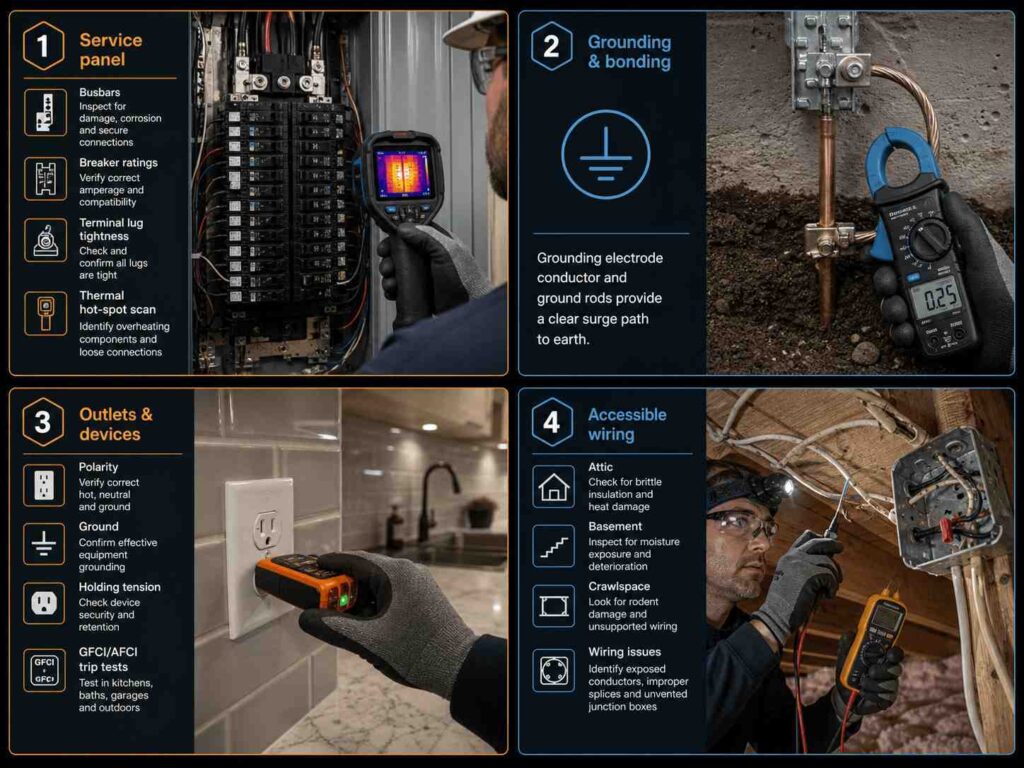
A professional electrical audit goes way beyond taking a glance at your breaker box. When a licensed C-10 electrical contractor conducts a safety check, they follow a systematic diagnostic process to evaluate your home’s entire power system:
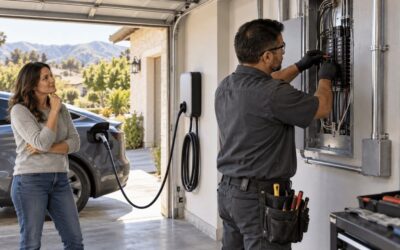
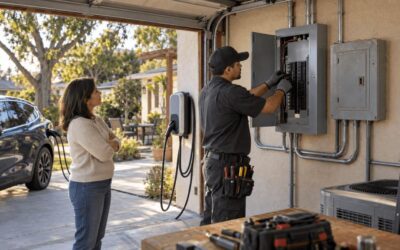
- Main Service Panel Audit: The technician removes the dead-front metal cover to inspect the main busbars, verify breaker ratings, check terminal lug tightness, and use thermal testing tools to spot hidden hot spots caused by high electrical resistance.
- Grounding & Bonding Verification: The inspector tests your main grounding electrode conductor and external ground rods to ensure voltage surges and static charges have a clear, unbroken path into the earth.
- Outlet & Device Testing: Every accessible wall outlet is tested for correct polarity, solid ground connection, and proper mechanical holding tension. GFCI and AFCI receptacles in kitchens, bathrooms, garages, and outdoor spots are tested to make sure they trip quickly during a fault.
- Accessible Wiring & Junction Box Check: In attics, basements, and crawlspaces, accessible wire runs are checked for brittle insulation, improper wire splices, exposed conductors, or unvented junction boxes.
Which Homes in Glendora Require Immediate Electrical Audits?
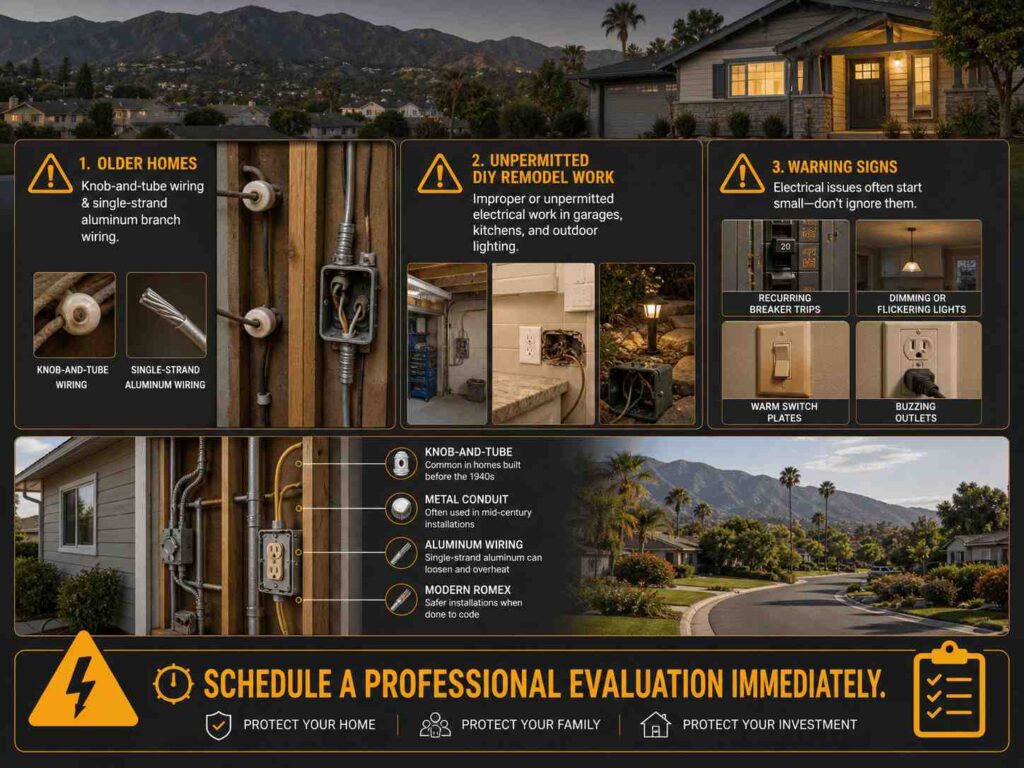
While routine checkups make sense for any property, certain homes carry elevated risk profiles that make scheduling an electrical code safety audit urgent:
- Homes with Legacy Wiring Systems: Properties built in the 1960s and 1970s with single-strand aluminum branch wiring, or pre-1950s homes with leftover knob-and-tube runs, should be checked right away to verify that connections remain stable. You can learn more about these risks in our detailed guide on outdated electrical wiring in Glendora homes.
- Properties with Unpermitted DIY Work: If a past owner finished a garage, remodeled a kitchen, or put in outdoor lighting without pulling permits, an inspection uncovers ungrounded circuits or undersized wiring before trouble starts.
- Homes Showing Clear Warning Signs: Any house dealing with recurring breaker trips, dimming overhead lights, warm switch plates, or buzzing outlets needs a professional safety evaluation immediately. If you notice any of these symptoms, read our guide on flickering lights and tripping breakers.
How Do Electrical Safety Inspections Protect Real Estate Transactions?
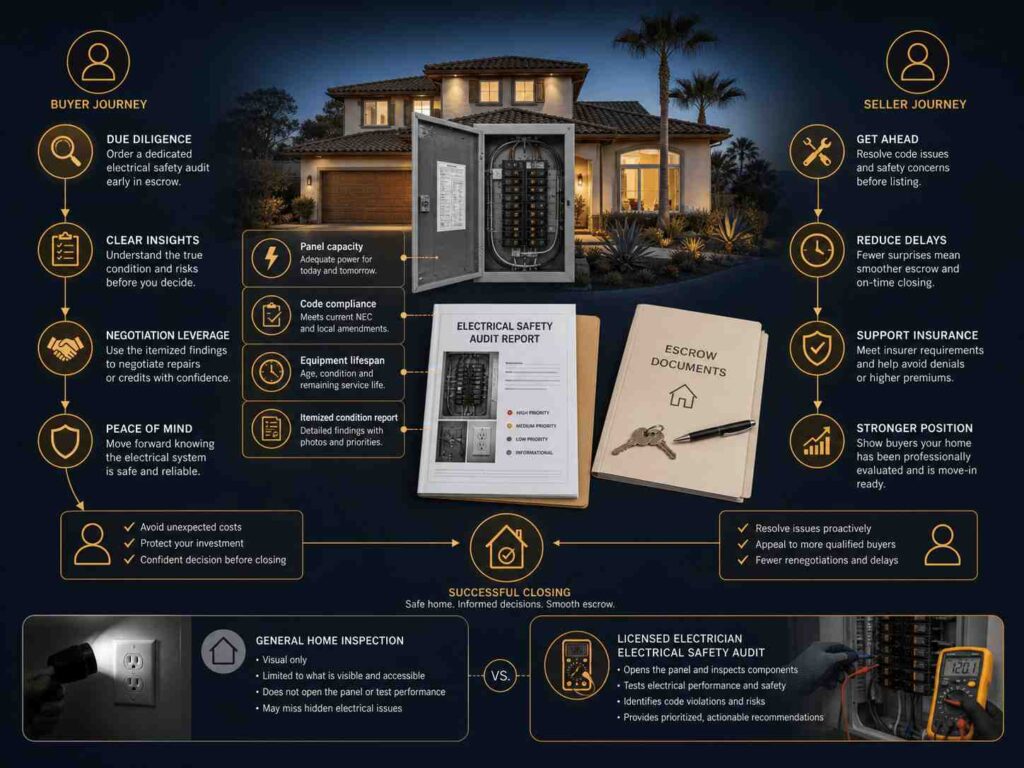
Buying or selling a property in Southern California involves strict disclosure rules and insurance underwriting criteria. General home inspectors do great work evaluating overall structural and mechanical condition, but their scope when it comes to electrical infrastructure is naturally limited.
A dedicated electrical safety audit from a licensed electrician gives you an itemized condition report detailing panel capacity, code compliance, and remaining equipment lifespan. For buyers, this report offers solid negotiation leverage and peace of mind before closing. For sellers, resolving small code issues before listing prevents last-minute closing hiccups and satisfies California home insurance requirements. If your inspection reveals an outdated panel, you may also want to review our Glendora electrical panel upgrade guide.
Real Scenarios: Diagnostics in Action
Seeing how safety checkups work in real local neighborhoods shows why professional diagnostics make all the difference.
Scenario A: The Pre-Purchase Discovery
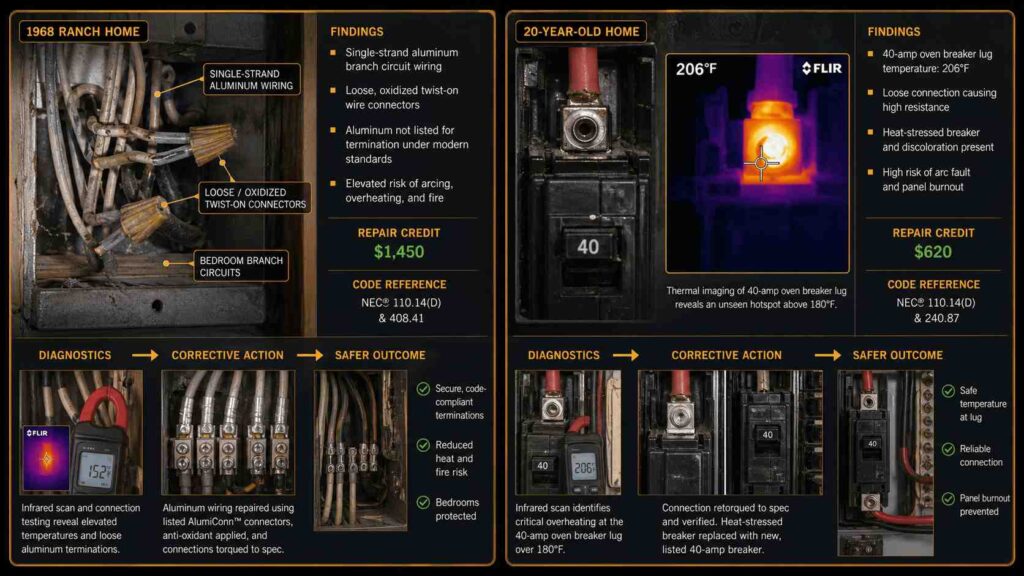
A couple fell in love with a 1968 ranch home near the Glendora foothills area. During their escrow contingency window, they decided to schedule a dedicated electrical safety audit alongside their standard home inspection.
- What Diagnostics Revealed: While the general inspector noted that the breaker panel looked functional, our detailed audit uncovered unmitigated single-strand aluminum wiring across the bedroom branch circuits, complete with loose, oxidized twist-on connectors.
- The Result: Armed with our itemized safety report, the buyers negotiated a repair credit from the sellers to perform code-compliant aluminum remediation before moving in.
Scenario B: The Routine 5-Year Maintenance Check
A family living in a 20-year-old home booked a routine 5-year electrical checkup despite having no obvious symptoms.
- What Diagnostics Revealed: Thermal imaging inside the main panel showed that a 40-amp breaker lug feeding the electric oven had loosened over time due to continuous thermal expansion and contraction cycles, creating an unseen thermal hot spot reading over 180 degrees Fahrenheit.
- The Result: The technician retorqued the terminal connection and replaced the heat-stressed breaker on the spot, preventing a major panel burnout right before the holidays.
3 Practical Rules for Electrical Maintenance
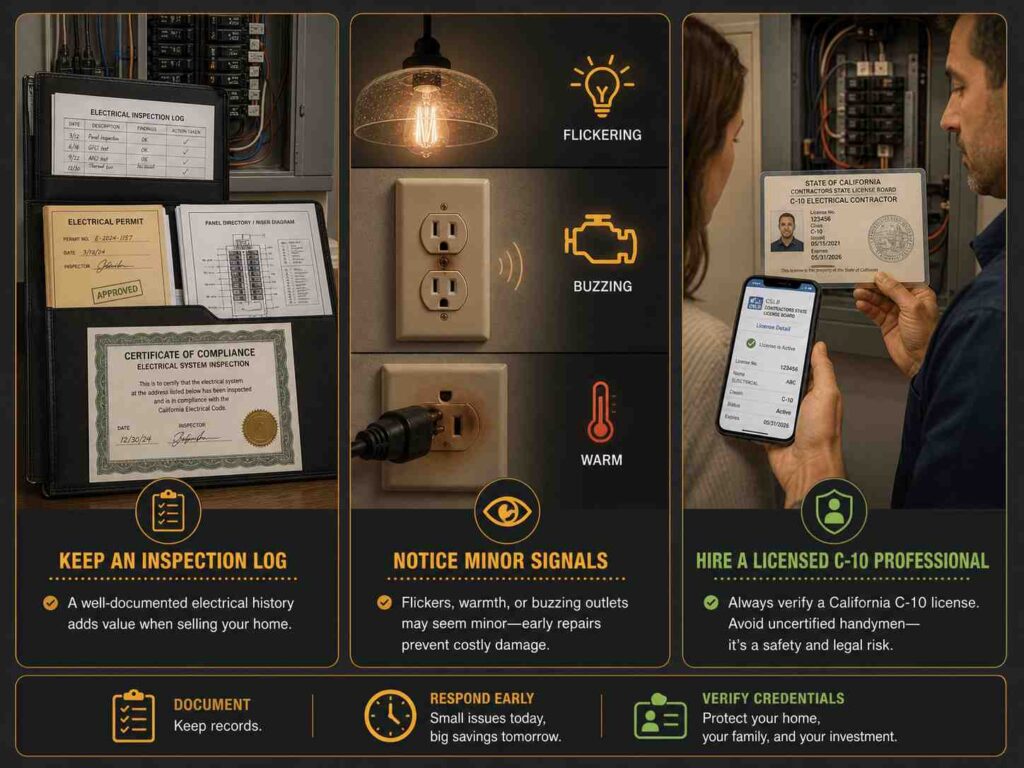
- Keep an Inspection Log: Keep a folder with your past electrical permits, safety certificates, and panel diagrams. Having clear documentation adds real value when you put your home on the market.
- Pay Attention to Minor Signals: Treat occasional flickering lights or warm outlet plates like a check engine light on your car dashboard. Fixing small issues early prevents costly repairs later.
- Always Hire a Licensed C-10 Professional: Verify that your inspector holds an active California C-10 Electrical Contractor license rather than relying on uncertified handymen.
Conclusion
Your home electrical system works hard behind the scenes every second of the day. Scheduling regular electrical safety inspections ensures that your wiring, breaker panel, and safety devices remain in peak operating condition, protecting your family and your property investment.
At Pro Electric Services Inc., we provide clear, educational safety audits designed to give you complete clarity on your home electrical health. We never manufacture problems or push unnecessary overhauls, focusing strictly on clear facts and code-compliant solutions.
Is your home due for a routine safety checkup? Contact Pro Electric Services Inc. today to schedule a comprehensive home electrical safety inspection in Glendora.
Frequently Asked Questions
A comprehensive residential electrical safety inspection typically takes between 1.5 to 3 hours to complete, depending on your home square footage, the number of sub-panels, and overall system complexity.
No, standard electrical safety audits are completely non-invasive. Electricians evaluate accessible outlets, light switches, attics, crawlspaces, and main breaker panels without cutting or damaging your walls.
Professional electrical safety inspections generally range between $200 and $450 depending on home size and detail level, and we provide clear upfront pricing before arriving at your property.
While California law mandates seller property disclosures regarding known defects, a formal electrical audit is not legally required to sell a home, though buyers and insurance companies frequently request one.
Yes, many insurance carriers offer premium discounts or remove high-risk coverage surcharges when you provide an inspection report from a licensed electrician confirming your home is free of hazardous wiring.
A general home inspector performs visual operational checks on all home systems, while a licensed electrical contractor performs deep technical diagnostics, load calculations, thermal imaging, and detailed panel testing.
Landlords are legally obligated to maintain habitability standards under California Civil Code, which includes ensuring all electrical wiring, outlets, and lighting systems meet safety standards through periodic inspections.
Power to your entire home is rarely shut off for long periods; technicians only briefly disconnect power to specific circuits or the main panel for a few minutes while performing internal terminal checks.
Always verify that the inspector works for a licensed C-10 Electrical Contractor registered with the California Contractors State License Board and carries active general liability and workers compensation insurance.
Yes, testing hardwired smoke and carbon monoxide detectors, verifying battery backups, and checking expiration dates are standard parts of a comprehensive residential electrical safety audit.