Keypoints
– Early Warning Signs: Flickering overhead lights and frequent circuit breaker trips are physical symptoms of underlying electrical strain or wiring faults.
– Root Causes of Breaker Trips: Breakers trip due to three distinct causes: circuit overloads, short circuits, or ground faults, each carrying different safety implications.
– Voltage Drops Explained: Whole-house or localized light dimming when heavy appliances turn on points to voltage drop caused by overloaded circuits or aging connections.
– The Danger of Persistent Resetting: Forcing a tripped breaker back on without addressing the root cause increases the risk of severe thermal damage and electrical fires.
– Professional Diagnostic Accuracy: Comprehensive electrical troubleshooting pinpoints exact points of failure without unnecessary panel replacements or wholesale rewiring.
Introduction
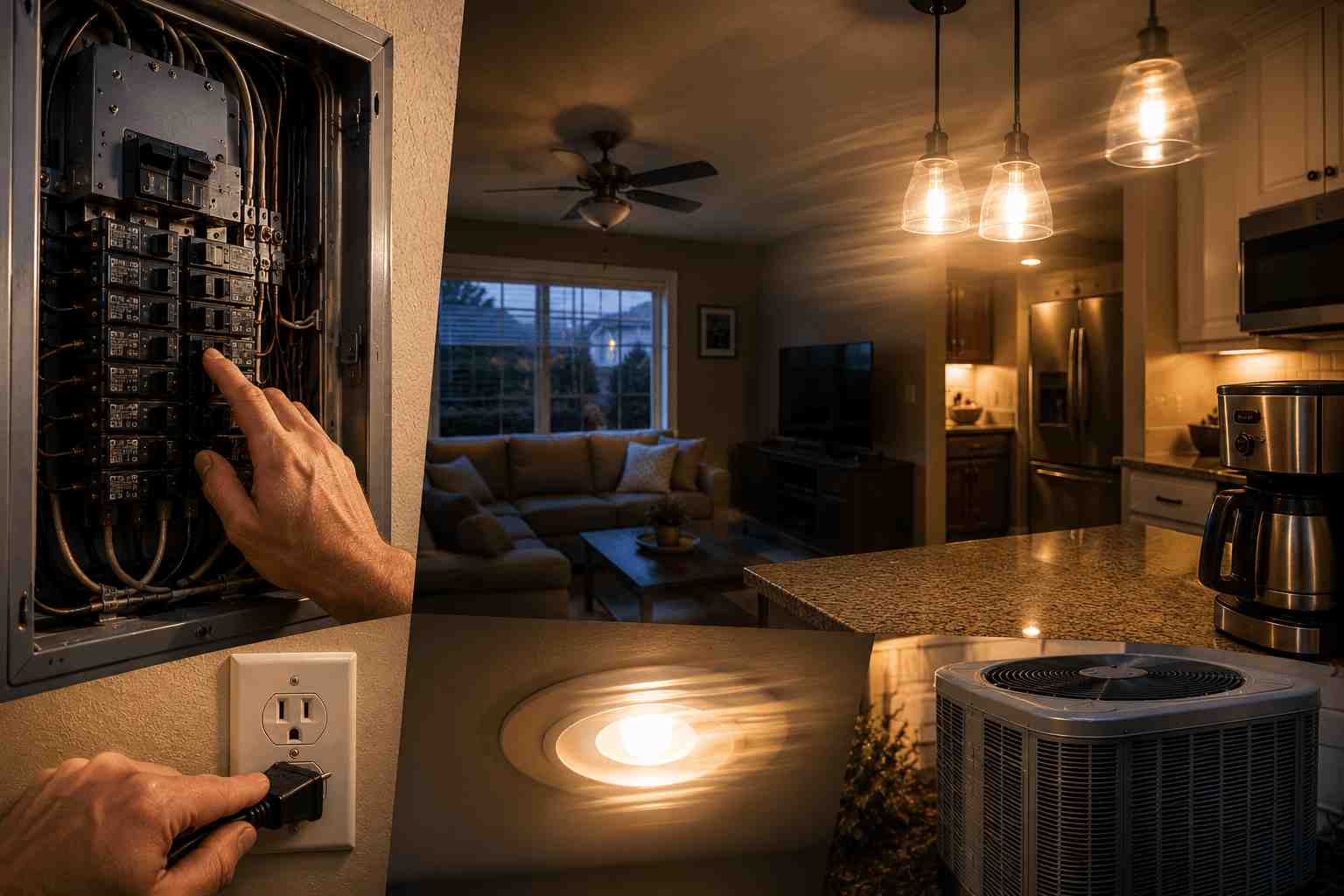
We have all been there. You are in the middle of making morning coffee, someone fires up a hair dryer in the bathroom, and suddenly the kitchen lights take a dip. Or maybe you are relaxing in the living room on a blistering Glendora afternoon, the central air conditioner kicks on, and the overhead fixture blinks before settling down.
It is easy to brush off these little moments as quirky home habits. You flip the tripped switch back into place, screw in a fresh light bulb, or promise yourself not to run the microwave and toaster at the same time. But those flickering lights and tripping breakers are your home electrical system trying to send you a message.
At Pro Electric Services Inc., our philosophy is straightforward: teach first, sell second. Flickering lights and tripping breakers are physical warning signs that something along your electrical line is generating excess heat, pulling more power than it should, or losing solid contact. Understanding why these glitches happen helps you protect your appliances, keep your property safe, and know exactly when it is time to bring in a licensed professional.
Why Do My Lights Flicker or Dim When Appliances Turn On?
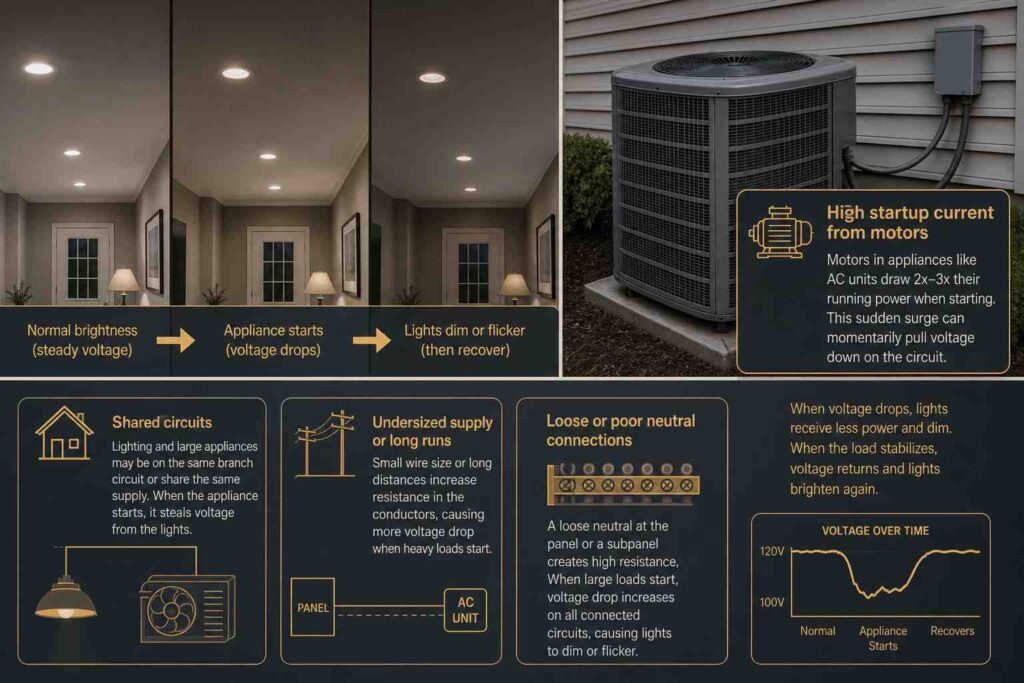
If you notice your lights dipping momentarily when a major appliance starts up, you are witnessing a common electrical event known as voltage drop. When a motorized appliance like a central air conditioner compressor, refrigerator, or washing machine starts running, it requires a brief burst of high startup current, often two to three times its normal running power.
If your branch circuits are properly sized and your panel terminal connections are tight, this sudden power draw is absorbed smoothly. However, if your lighting fixtures share a single circuit with high-draw appliances, or if the main electrical supply lines are undersized for your home total load, that sudden surge steals voltage from surrounding fixtures.
While a quick, barely noticeable dip when the AC turns on can be normal in older foothill properties, persistent flickering, rhythmic pulsing, or dramatic dimming across multiple rooms signals an imbalanced circuit or a loose neutral wire connection at the panel. If your home still operates on legacy 100-amp service, whole-house dimming may also indicate that your entire electrical panel requires an upgrade to handle modern power demands.
Why Does a Circuit Breaker Trip Repeatedly?
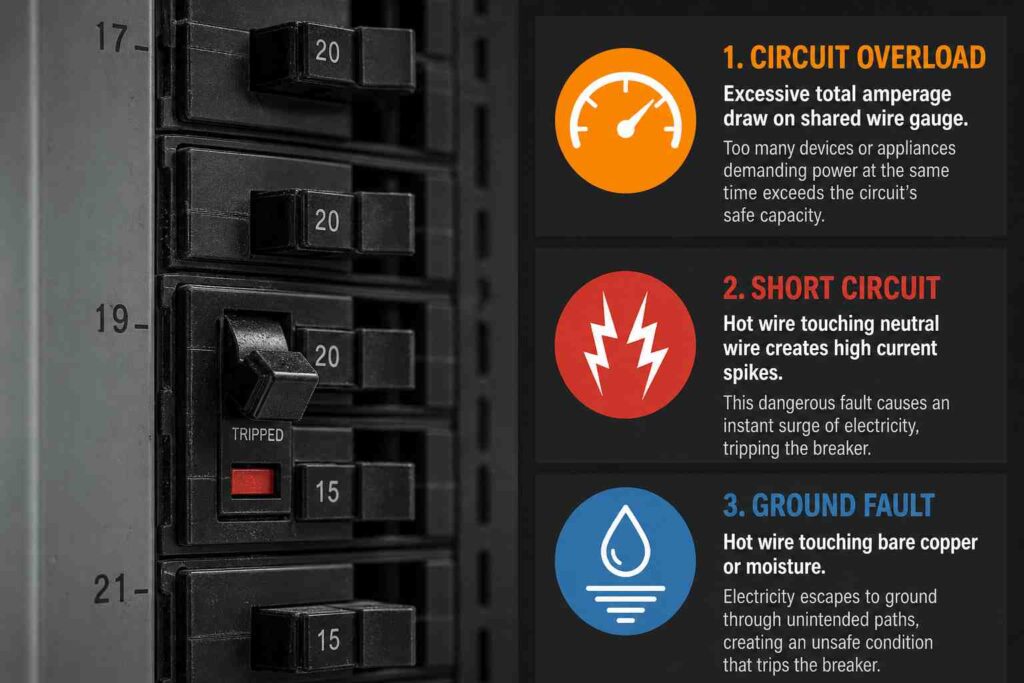
Your circuit breaker is a mechanical safety valve. Its primary job is to cut off electrical flow the moment current exceeds safe levels, preventing copper wires inside your walls from overheating and catching fire. When a breaker trips repeatedly, it is doing its job, but it is also telling you that one of three underlying issues exists:
Circuit Overload: This is the most common culprit. An overload happens when too many electrical devices are plugged into the same circuit, drawing more total amperage than the wire gauge can safely handle.
Short Circuit: A short circuit occurs when a hot energized wire comes into direct contact with a neutral wire inside an outlet, switch, or junction box. This creates an immediate spike in current that snaps the breaker off instantly.
Ground Fault: Similar to a short circuit, a ground fault happens when an energized hot wire touches a grounded metal box, a bare copper ground wire, or comes into contact with moisture, triggering an immediate safety trip.
When Are Flickering Lights and Tripping Breakers a Serious Fire Hazard?
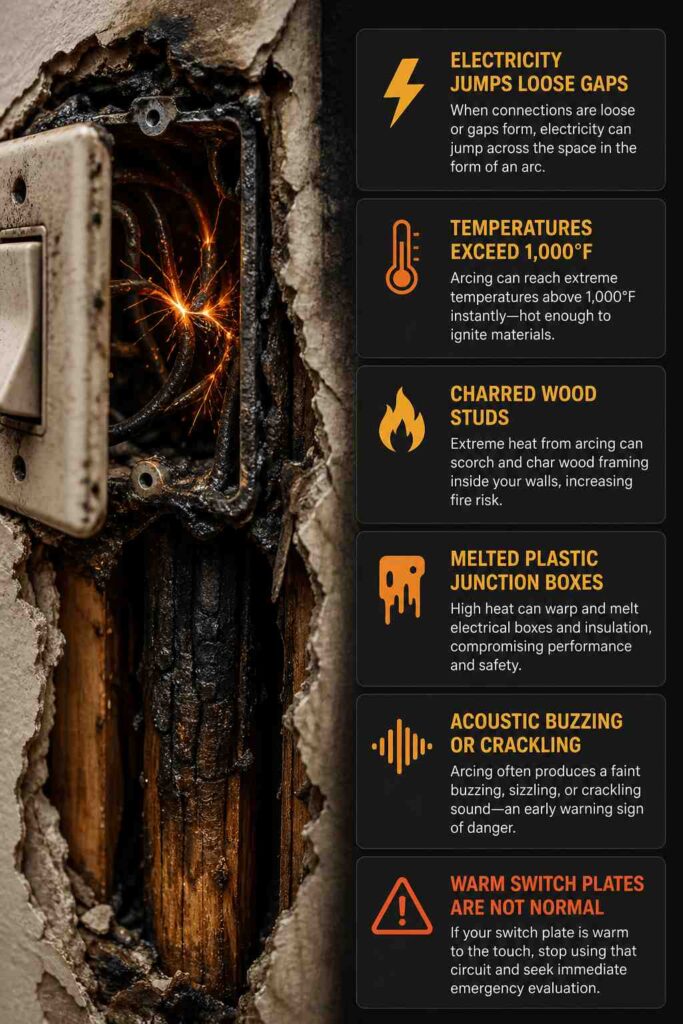
Flickering lights and tripping breakers cross the line from minor annoyances into genuine fire hazards when high electrical resistance produces active arcing.
Arcing happens when electricity jumps across tiny gaps in loose wiring connections, worn outlets, or deteriorating breaker terminals. These micro-sparks generate intense heat, often reaching temperatures over 1,000 degrees Fahrenheit, which can easily char surrounding wood studs or melt plastic junction boxes.
If your flickering lights or tripping breakers are accompanied by a faint buzzing sound behind the wall, warm switch plates, or a subtle burning plastic odor, you are dealing with active arcing that requires immediate professional evaluation.
What Is the Difference Between a Bad Light Bulb and a Wiring Problem?
Before calling an electrician for electrical troubleshooting in Glendora, it helps to run a simple, safe check to isolate whether the issue is a simple fixture quirk or a systemic wiring problem:
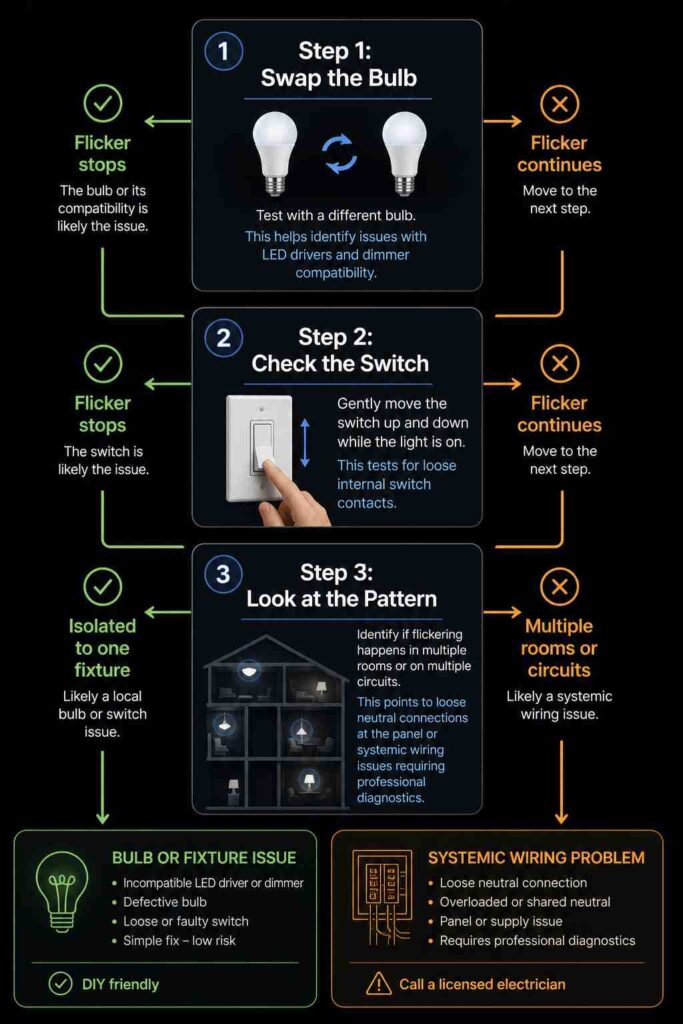
Step 1: Swap the Bulb: If a single lamp or fixture is flickering, swap the bulb with a known working one. Modern LED bulbs can flicker if used with incompatible dimmer switches or if their internal micro-drivers are failing.
Step 2: Check the Switch: If swapping the bulb does not work, gently jiggle the wall switch plate. If the flickering reacts to movement, the internal contacts inside the switch may be worn or loose.
Step 3: Look at the Pattern: If lights flicker across multiple rooms, or if dimming happens across entirely separate circuits, the issue is not isolated to a single bulb. It points to a loose neutral wire at your main panel or an issue on the utility line entering your property.
When basic bulb and switch checks do not solve the problem, professional electrical diagnostics take over to uncover the root cause.
Real Scenarios: Diagnostics in Action
Theory is helpful, but seeing how troubleshooting works in real local homes shows why professional diagnostics make all the difference.
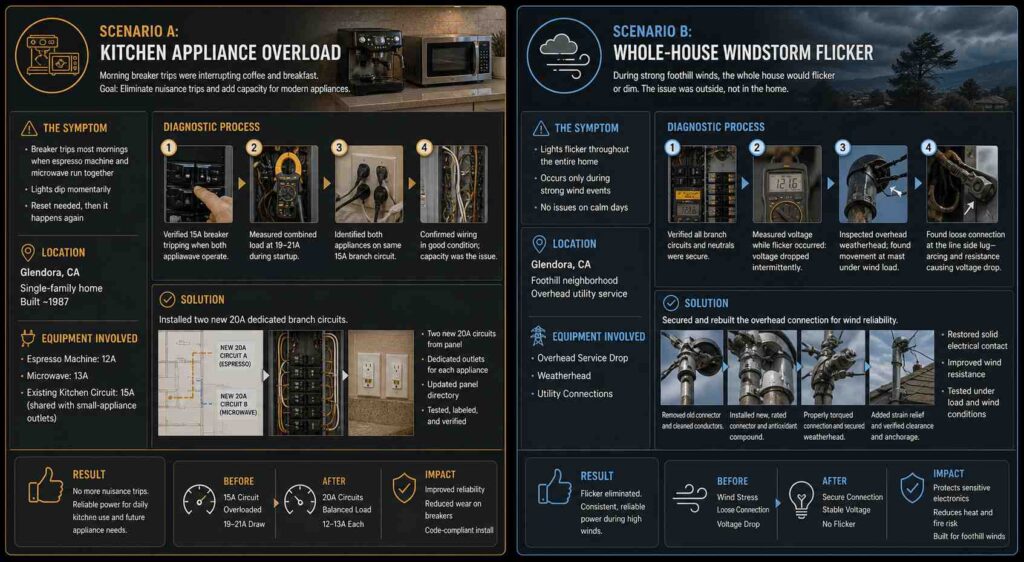
Scenario A: The Kitchen Appliance Overload
A homeowner near Grand Avenue in Glendora reported that her kitchen breaker tripped every morning whenever she ran the espresso machine and toaster simultaneously. She assumed she needed a costly main breaker box replacement.
What Diagnostics Revealed: A detailed load test showed that a previous kitchen update had combined all countertop outlets, the microwave, and the garage chest freezer onto a single 15-amp circuit.
The Solution: Instead of replacing the main panel, our team installed two new dedicated 20-amp branch circuits for the kitchen counter, balancing the electrical load and eliminating breaker trips completely.
Scenario B: The Mysterious Whole-House Flicker
A resident in an established Glendora neighborhood experienced flickering overhead lights across the entire house whenever wind gusts came down from the San Gabriel Mountains.
What Diagnostics Revealed: The interior electrical panel and branch wiring were fine, but the overhead utility service drop connection at the weatherhead had weathered and loosened over decades. Continuous thermal expansion and mechanical wind stress caused intermittent contact at the splice during gusty weather.
The Solution: We coordinated with the local power utility to safely secure and rebuild the weatherhead connection, restoring steady voltage to the entire property.
3 Practical Rules for Electrical Troubleshooting
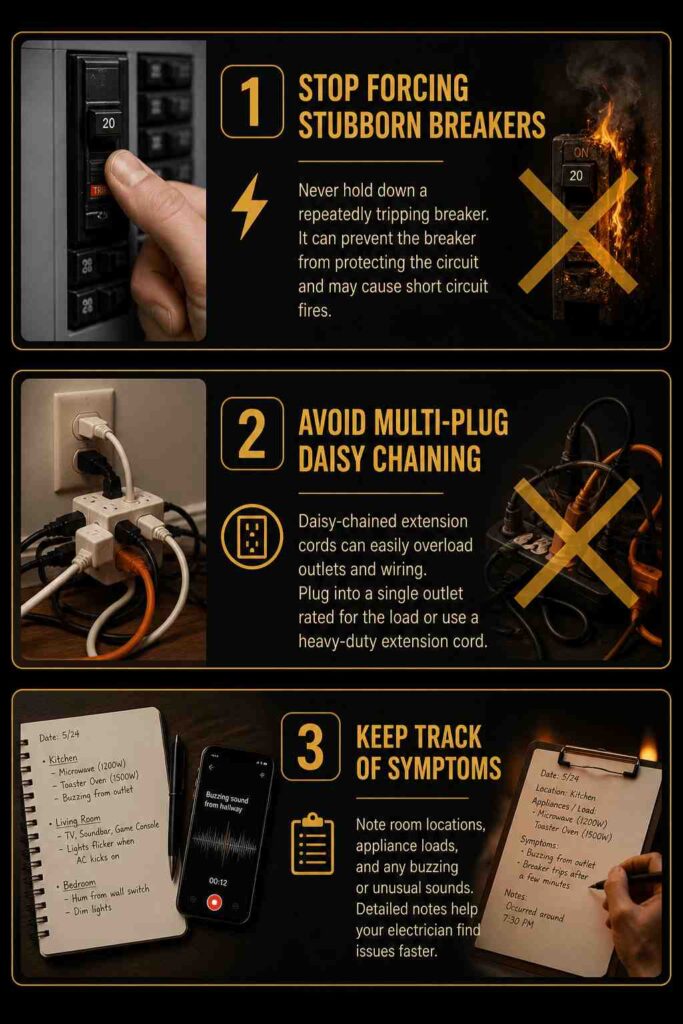
– Stop Forcing Stubborn Breakers: If a circuit breaker trips immediately every time you reset it, do not force it to stay on. Leave it switched off until a professional can inspect the line for short circuits.
– Avoid Multi-Plug Daisy Chaining: Never plug multiple power strips or heavy-duty extension cords into a single wall outlet to power high-draw appliances.
– Keep Track of Electrical Symptoms: Note which room lights dim, what appliances were running when a trip occurred, and whether you hear sounds. This information helps your electrician pinpoint the issue quickly.
Conclusion
Flickering lights and tripping breakers are your home’s built-in early warning system. Paying attention to these subtle cues allows you to fix small wiring issues before they turn into costly repairs or dangerous electrical hazards.
At Pro Electric Services Inc., we provide honest diagnostics, clean workmanship, and clear safety advice. Whether you are dealing with a nagging kitchen overload or mystery flickering lights, our licensed team of electricians is here to help you get your home power running smoothly again.
Tired of resetting breakers or dealing with flickering lights? Contact Pro Electric Services Inc. today to schedule expert electrical troubleshooting in Glendora.
Frequently Asked Questions
Yes, a malfunctioning appliance with an internal short circuit, damaged power cord, or failing motor can draw excessive current and trip the circuit breaker immediately upon being plugged in or turned on.
Lights flickering during high winds usually indicate a loose connection at your outdoor overhead service drop, weatherhead, or utility pole attachment point where blowing tree branches or wind movement affects the incoming power line.
Replacing a breaker requires working inside an open panel near energized main busbars carrying lethal voltage, so breaker replacements should always be performed by a licensed C-10 electrical contractor.
LED bulbs often flicker or buzz when paired with older legacy dimmer switches designed for incandescent bulbs, requiring an upgrade to a modern LED-compatible electronic low-voltage dimmer.
A breaker that feels noticeably hot indicates excessive electrical resistance, loose wire terminal connections, or an ongoing heavy overload that requires turning off main power and calling an electrician immediately.
Degraded wiring with loose connections creates high electrical resistance, converting electricity into wasted heat and forcing appliances to work harder, which can drive up overall energy consumption.
Professional diagnostic service calls range from $150 to $350 depending on the complexity of the issue, and we provide clear upfront quotes before performing any corrective repairs.
Whole-house flickering points to a main service line issue, such as a loose main neutral wire in your breaker panel, a failing main breaker switch, or a utility supply issue from the power company.
An AFCI is an advanced circuit breaker that detects dangerous electrical micro-arcing inside wall cavities and cuts power long before traditional breakers react, providing superior electrical fire prevention.
You should call an emergency electrician immediately if flickering lights are accompanied by burning plastic smells, buzzing sounds behind wall plates, scorched outlets, or a hot electrical panel.