Keypoints
– Regulatory Mandates: Recent updates to the California Electrical Code requiring whole-house surge protection are designed to protect microprocessors in modern homes.
– Beyond Lightning Strikes: Over 80 percent of electrical surges originate internally when heavy motorized equipment like central HVAC compressors cycle on and off.
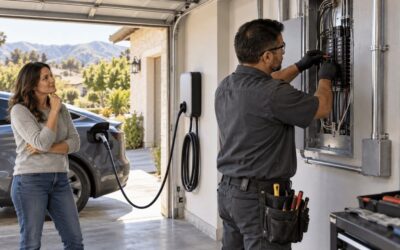
– Limitations of Plug-In Strips: Standard power strips provide localized cord protection but offer zero defense for hardwired appliances, central AC units, or electric vehicle chargers.
– Panel-Level Defense: Type 1 and Type 2 Surge Protective Devices installed at your main breaker panel instantly divert high-voltage spikes into your grounding rod.
– Compliance During Inspections: Installing certified surge protection ensures your property meets current local building codes during electrical service upgrades or home renovations.
Introduction
Take a quick mental inventory of everything running on power inside your Glendora home right now. Beyond obvious electronics like laptops, smart TVs, and phones, think about the appliances you rely on every day. Your smart refrigerator, high-efficiency washer, central HVAC system, variable-speed pool pump, digital microwave, and electric vehicle charger all depend on tiny silicon control boards to operate.
These microcircuits make our homes incredibly convenient and energy-efficient, but they come with a major catch: delicate microprocessors hate voltage spikes. A voltage jump lasting just a few microseconds can cook fragile circuitry, causing weird system glitches, cutting appliance lifespans short, or destroying expensive equipment in an instant.
At Pro Electric Services Inc., we always lead with education. California electrical code surge protection rules have shifted significantly in recent years to deal with these modern hazards. Knowing why the state now mandates surge protection, how voltage spikes actually move through your home, and how to defend your panel gives you real peace of mind and keeps money in your pocket.
What Is a Whole-House Surge Protector and How Does It Work?
Many people figure that plugging a desktop setup into a ten-dollar plastic power strip has them completely covered. In reality, those cheap plug-in strips are just localized secondary backup. They only protect the specific items plugged directly into their sockets, offering zero defense for your hardwired central air conditioner, built-in wall oven, smart thermostat, or recessed lighting dimmers.
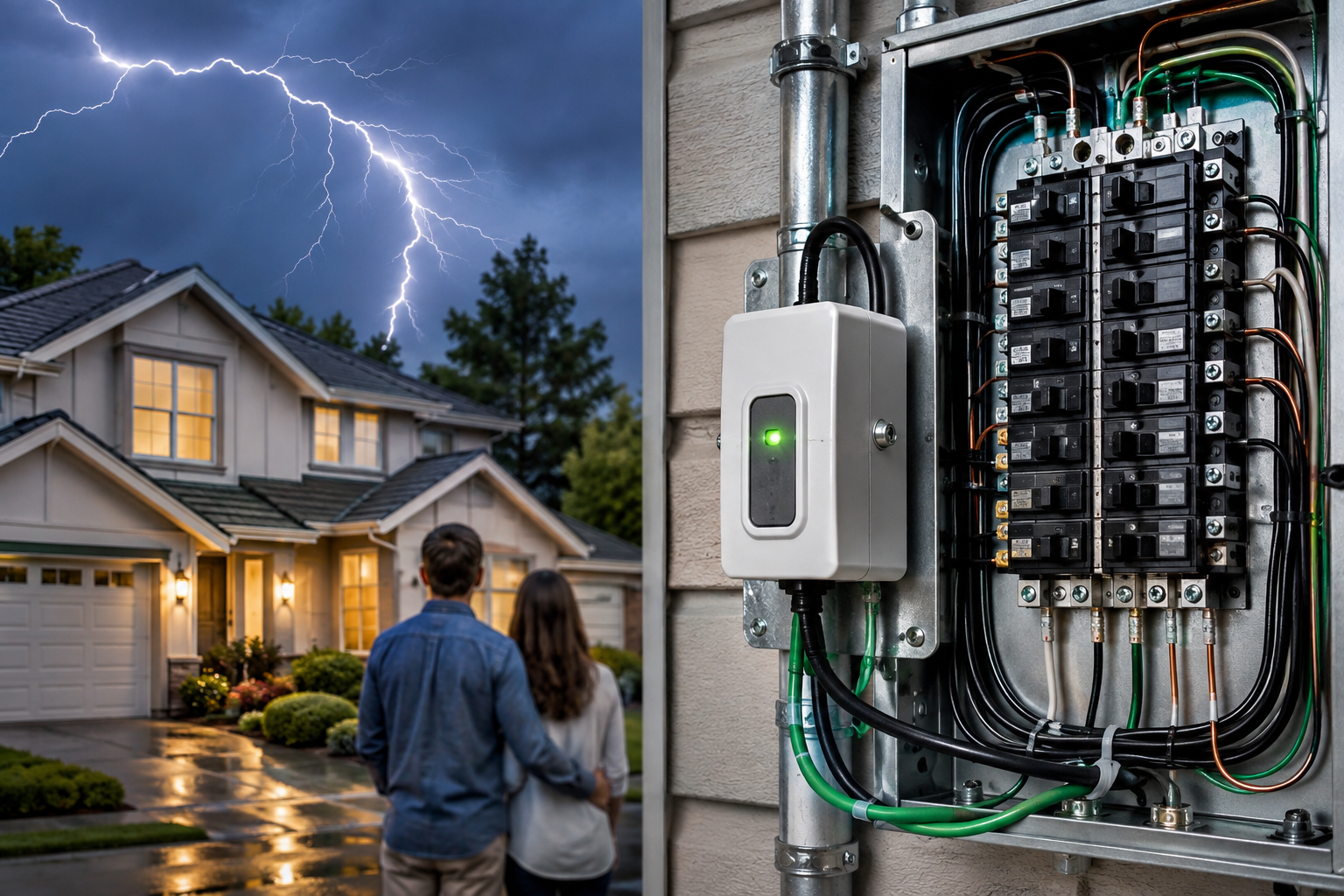
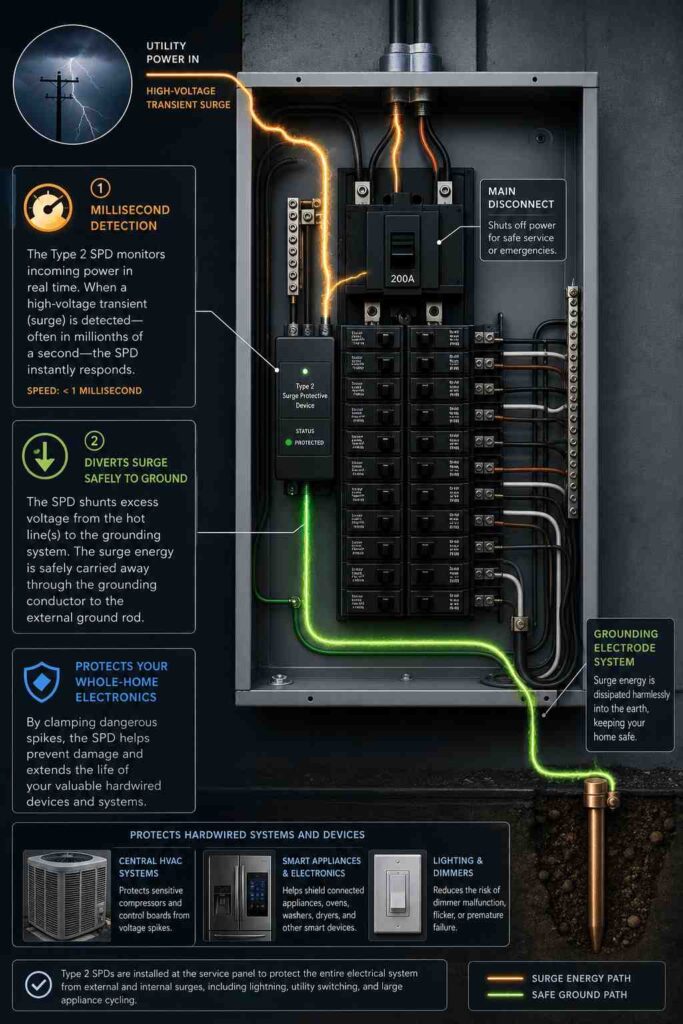
A whole-house surge protective device mounts directly at or inside your main breaker panel. In electrical terms, these are typically classified as Type 2 Surge Protective Devices, mounted on the load side of the main service disconnect, while Type 1 units sit on the utility side. Think of a whole-house surge protector as a lightning-fast safety valve for your home’s incoming power. Under normal conditions, electricity flows smoothly through your main breaker out to your branch circuits.
The moment a high-voltage spike hits your utility lines, the surge protector detects that excess voltage in a fraction of a millisecond. It acts like an instant bypass switch, catching the dangerous surge and dumping it safely down into your external grounding rod buried in the dirt outside.
Why Did California Electrical Codes Make Surge Protection Mandatory?
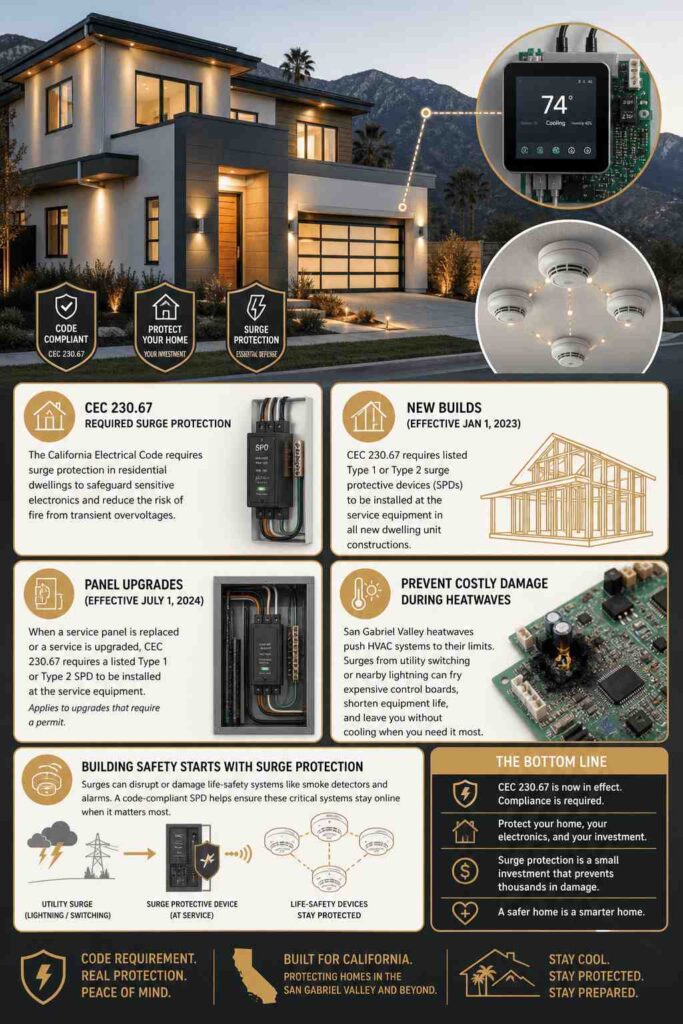
Following updates aligned with the National Electrical Code under California Electrical Code Section 230.67, whole-house surge protection became mandatory for all new residential builds and main panel replacements across the state.
State code regulators realized that the average modern home carries tens of thousands of dollars in delicate electronic equipment. Beyond the heavy price tag of replacing fried gear, damaged control boards on critical home systems present real safety hazards, like losing your central AC during a triple-digit San Gabriel Valley heatwave or knocking out smart smoke detectors during power fluctuations. By requiring panel-level surge protection on modern panels, CEC surge protection residential standards ensure every updated home has baseline defense built right into its foundation.
When you are planning major service upgrades, ensuring your system is fully compliant goes hand in hand with other critical improvements, as outlined in our guide on when you might need an electrical panel upgrade.
Where Do Electrical Surges Actually Come From?
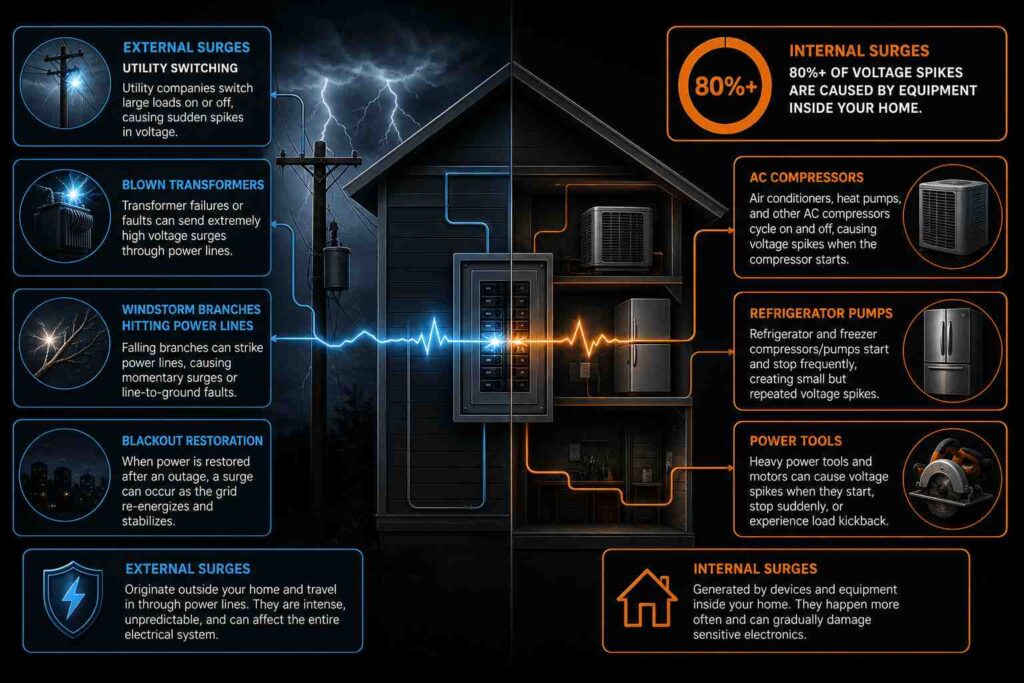
Mention an electrical surge, and most people picture a massive lightning bolt hitting a power pole down the street. While direct lightning strikes certainly cause devastating spikes, they account for only a tiny fraction of the electrical surges hitting home wiring. Voltage spikes fall into two main categories:
External Surges: These originate outside your property line. Common culprits include utility grid switching, blown transformers, tree branches knocking into overhead lines during windy foothill storms, and sudden power snaps when regional power grids come back online after a blackout.
Internal Surges: Surges generated inside your own house account for more than 80 percent of all transient voltage spikes. Every single time a motorized appliance turns on or off, whether it is your central AC compressor, refrigerator pump, or a heavy power tool in the garage, it kicks a brief voltage spike back into your home circuits. While one minor surge will not ruin an appliance right away, hundreds of these tiny daily spikes wear down delicate circuit boards until they give out unexpectedly.
What Are the Key Benefits of Installing a Code-Compliant Surge Protector?
Now that you understand where transient voltage comes from, looking at the practical advantages of panel-level defense makes clear why code authorities made it mandatory. Installing certified surge protection delivers three major advantages:
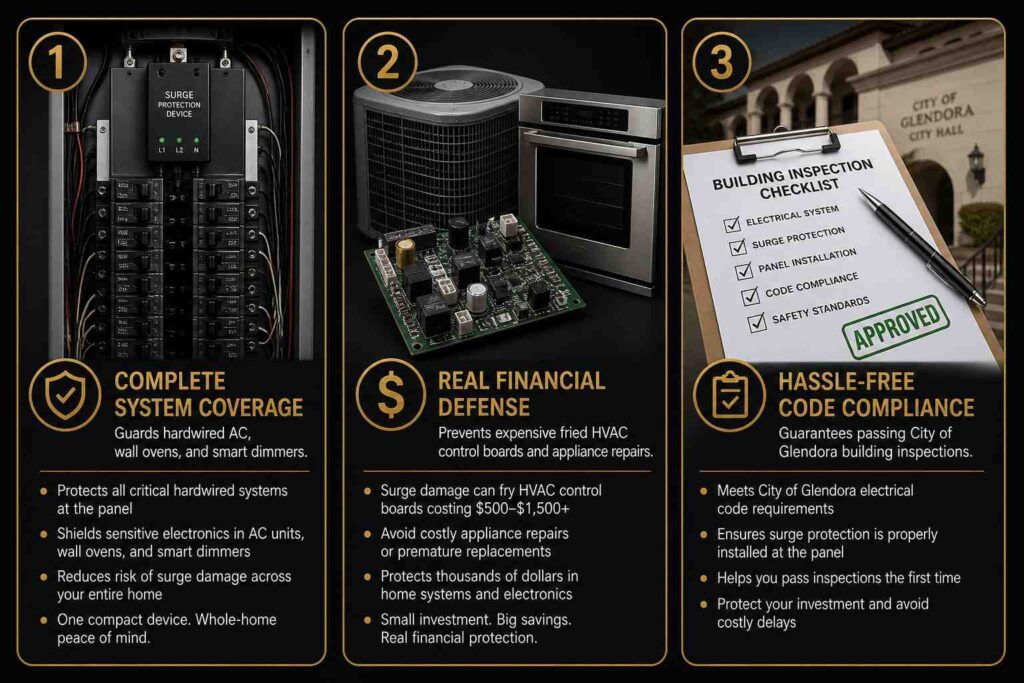
- Complete System Coverage: Panel-mounted protection guards every outlet, light switch, and hardwired appliance in your home, protecting major equipment that plug-in strips cannot touch.
- Real Financial Defense: Protecting smart appliances, HVAC control boards, and home automation gear prevents sudden, expensive repair and replacement bills down the road.
- Hassle-Free Code Compliance: Adding a certified surge protector during panel work guarantees your property passes City of Glendora building inspections cleanly and boosts buyer confidence if you ever sell.
Real Scenarios: How Surge Protection Saves Modern Homes
Theory is helpful, but seeing how surge protection operates in real local neighborhoods shows why professional installation matters.
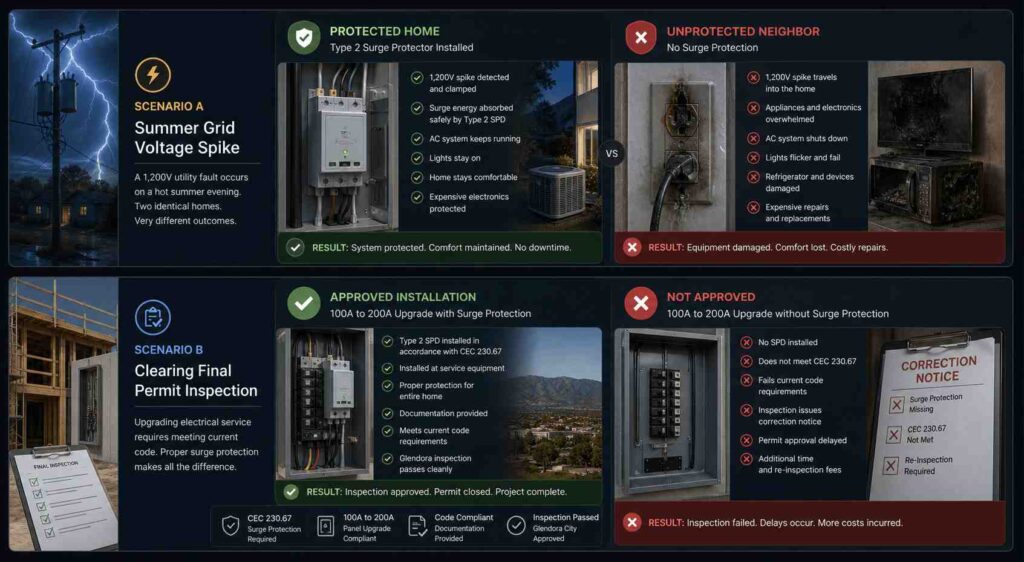
Scenario A: The Summer Grid Voltage Spike
On a 105-degree July afternoon in Glendora, air conditioning units across the neighborhood were running flat out. A utility transformer down the street suffered a sudden phase fault, sending a 1,200-volt transient spike down the local supply lines.
What Happened: Neighboring homes without panel-level surge protection ended up with fried control boards on their central AC units, dead microwave displays, and ruined garage door openers. The house equipped with a panel-mounted Type 2 surge protector absorbed the spike instantly, dumping the excess voltage safely into the earth and leaving every appliance running without a hitch.
Scenario B: Clearing the Final Permit Inspection
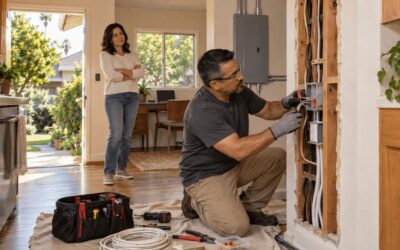
A homeowner updating her kitchen near downtown Glendora decided to swap her original 100-amp service panel for a modern 200-amp box to run a new induction cooktop.
What Happened: During the final electrical sign-off, the city building inspector checked the main panel to verify that a code-compliant surge protective device was installed per California Electrical Code standards. Because the installation included proper surge gear from day one, the permit was approved on the spot without frustrating re-inspection delays.
3 Practical Rules for Managing Household Surge Safety
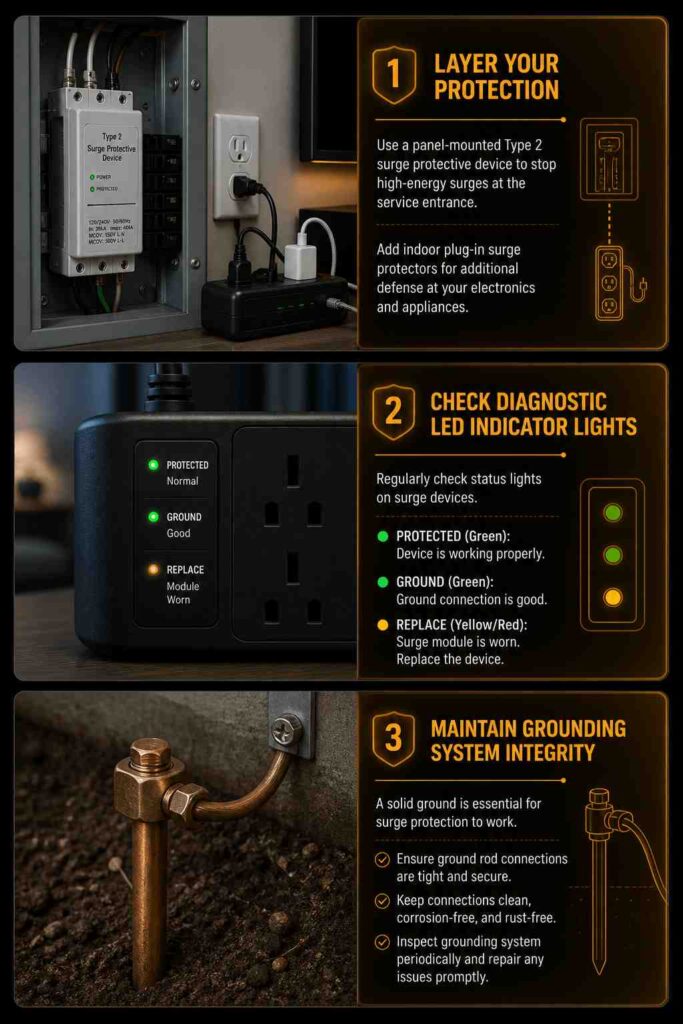
- Layer Your Protection: For complete safety, use a two-tiered setup. Let a panel-mounted surge protector catch big utility spikes at the door, while quality power strips handle sensitive office electronics or home theater gear indoors.
- Check Your Diagnostic Indicator Lights: Whole-house surge protectors come with built-in status LEDs. Get into the habit of checking these lights occasionally, because after absorbing a major utility spike, the internal protection module may need a quick replacement.
- Make Sure Your Grounding System Is Solid: Surge protectors depend entirely on a clean path to the dirt. Have an electrician confirm that your ground wire and ground rod connections are tight, clean, and rust-free.
Conclusion
The electronics running your Glendora home are more capable than ever, but they are also far more vulnerable to invisible power fluctuations. Understanding California surge protection requirements lets you take simple, effective steps to defend your appliances against daily internal spikes and sudden grid surges alike.
At Pro Electric Services Inc., we focus on honest advice, clean code-compliant work, and practical safety upgrades. Whether you are updating an old service panel, putting in an EV charger, or just looking to safeguard your expensive appliances, our professional licensed electricians are here to help.
Want to protect your home electronics from unexpected power spikes? Contact Pro Electric Services Inc. today to schedule professional electrical surge protection in Glendora, CA.
Frequently Asked Questions
Surge protection is mandatory under current California Electrical Code for all new residential builds and whenever an existing main service panel is replaced or upgraded. If your home still runs on its original un-upgraded panel, you are not legally forced to add one right now, though installing protection is still a smart safety move.
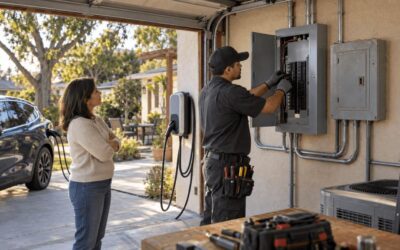
Installing a panel-mounted surge protector requires opening your main service box and working directly alongside energized busbars, which carries severe electrocution risks. This work should always be handled by a licensed C-10 electrical contractor to ensure safe wiring and keep manufacturer warranties valid.
Most quality panel-mounted surge protectors last between 3 and 7 years depending on how often grid surges hit your neighborhood. Most units feature visual indicator lights or warning tones that clearly let you know when the internal protective elements have done their job and need replacing.
No residential surge device can completely stop a direct, close-range lightning bolt carrying millions of volts. However, whole-house surge protectors easily absorb nearby indirect lightning strikes that travel down utility lines toward your home wiring.
Type 1 surge protectors mount on the utility side of your main breaker before power enters the house, while Type 2 surge protectors install on the load side directly inside your main breaker box. Type 2 devices are the standard choice for residential homes and panel upgrades.
Many major property insurance carriers offer lower rates or reduced deductibles for homes equipped with certified whole-house surge protection. Providing proof of professional installation from a licensed electrician is usually all it takes to request a policy discount.
Yes, repeated micro-surges from motors cycling inside your home slowly bake the delicate driver circuits inside LED bulbs and electronic dimmer switches. Putting protection at the panel level helps your modern lighting fixtures last significantly longer.
Adding a whole-house surge protector during a panel upgrade or as a standalone project usually costs between $350 and $750, depending on your panel layout and grounding condition. We always give you a clear, upfront estimate before starting any work.
Yes, standard power strips absorb small voltage spikes until their internal protective parts degrade completely. Once worn out, a power strip will keep passing electricity to your devices without offering any actual surge defense.
Yes, outdoor solar inverters and high-amperage Level 2 EV chargers are exposed to grid fluctuations and environmental voltage spikes. Installing panel-level surge protection helps keep these major clean-energy investments safe from fried circuit boards.