Keypoints
– The Heart of Your Home: Your electrical panel controls and distributes all household power. Older boxes in established Glendora neighborhoods were simply never built to handle today’s power-hungry lifestyle.
– Pay Attention to Warning Signs: Frequent breaker trips, dimming overhead lights, and warm panel doors are clear signals that your circuits are running dangerously hot.
– Amperage Standards Have Shifted: Upgrading from a legacy 100-amp service to a modern 200-amp setup gives you the breathing room needed for central AC, major appliances, and modern additions like EV chargers.
– Diagnostics Always Come First: A trustworthy electrician calculates your real-world power draw before recommending a full swap. You should only spend money on upgrades your property actually needs.
– Code Compliance Protects Your Investment: Pulling proper permits through the City of Glendora guarantees your system meets current California Electrical Codes and guards your home’s long-term resale value.
Introduction
Picture a warm July afternoon in the San Gabriel Valley. The central air is humming, a load of towels is tumbling in the dryer, and someone pops a plate into the kitchen microwave. Suddenly, darkness. The kitchen goes silent, and the AC cuts out right when you need it most.
You head outside to the side of the house or trek into the garage, flip the tripped switch back into place, and restore power. But two days later, it happens again.
If you live in one of Glendora’s established neighborhoods, this routine probably feels familiar. Homes built across the foothill communities in the 1950s, 1960s, or 1970s were engineered for a completely different lifestyle. Back then, a household might run a television, a handful of lamps, a refrigerator, and maybe a clock radio. Fast forward to today, and that exact same wiring setup is expected to power central HVAC units, smart home networks, induction cooktops, high-end entertainment setups, and vehicle chargers.
At Pro Electric Services Inc., our core philosophy is simple: teach first, sell second. Before you start stressing about massive overhauls, you deserve to understand how your panel works, how to spot actual warning signs of strain, and when a full electrical panel upgrade in Glendora, CA is genuinely necessary versus when a quick targeted adjustment will fix the problem.
Understanding Your Electrical Panel: The Central Switchboard
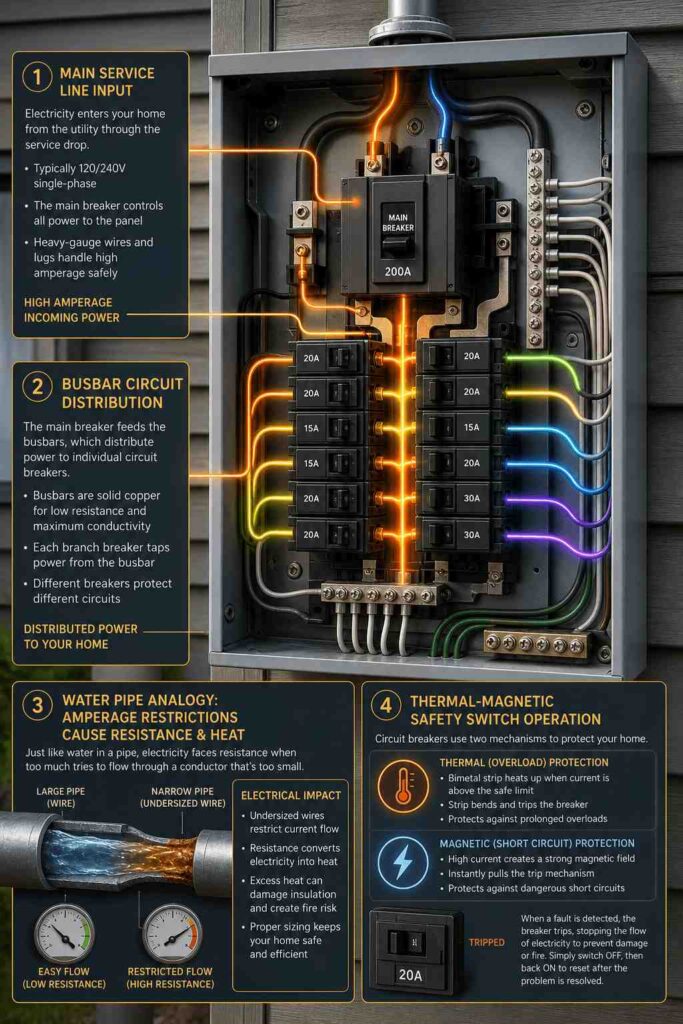
Your electrical panel goes by a few different names, such as breaker box, load center, or main service panel, but its job is always the same. It serves as the master switchboard for your entire house. Electricity flows from the street power lines directly into this box, passes through a main breaker, and then splits off into smaller individual branch circuits that feed specific rooms, outlets, and heavy appliances.
Think of your panel like the main water line coming into your house. If that main pipe was sized only to supply a single bathroom sink, turning on two showers and a garden hose at the same time would instantly choke the water pressure to a trickle. Electrical current works the exact same way. When your main box is rated for a low amperage limit, pulling modern amounts of current through it creates immediate electrical resistance, unwanted heat, and system instability.
Under normal conditions, circuit breakers act as your home’s built-in safety switches. The second a wire carries more electricity than it can handle safely, the breaker snaps off to cut the flow and prevent a fire. But when a panel gets too old or suffers physical internal degradation, those safety switches can fail to pop when they should, turning what ought to be a minor nuisance into a serious safety hazard.
5 Telltale Signs Your Panel Is Overworked
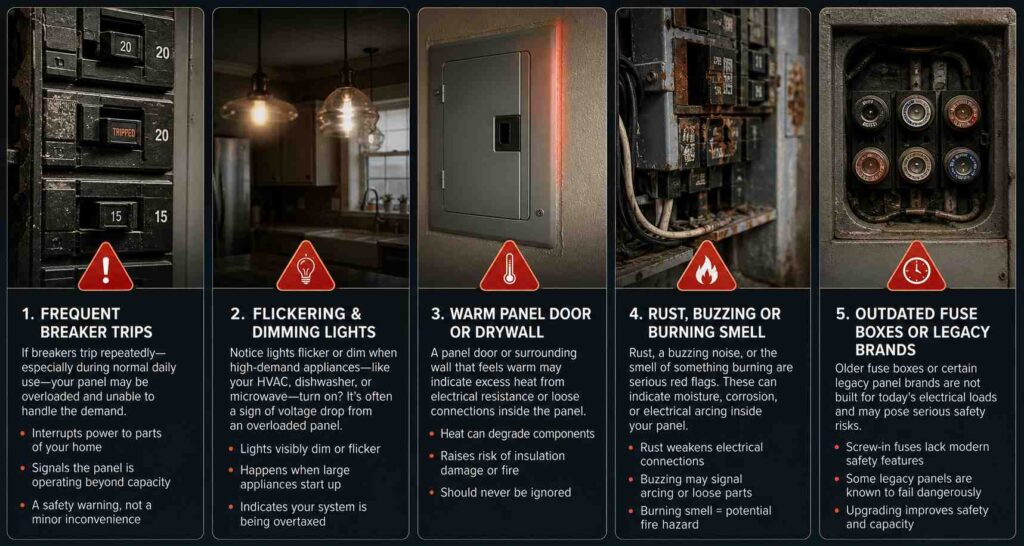
Not every electrical issue means you need to rip out your breaker box. Still, your home has clear physical ways of telling you when its power center is struggling to keep up. Here are five warning signs that deserve a professional look:
1. Breakers That Keep Tripping During Everyday Use
Plugging in a high-draw tool or a heavy-duty hair dryer might pop a breaker every once in a great while. But if you find yourself resetting switches weekly just carrying out normal, everyday routines, your panel is telling you its circuits are overloaded on a permanent basis.
2. Lights That Dip or Flick
Do your recessed ceiling lights dip whenever the central air conditioning kicks on or when the dishwasher enters its heat cycle? That sudden dip means high-demand mechanical equipment is stealing voltage from smaller lighting circuits because the main box is running at max capacity.
3. A Panel Door or Wall That Feels Warm
Electricity generates a small amount of natural thermal variation, but your breaker door, the individual switches, and the drywall surrounding the box should never feel warm to the touch. Heat is a direct symptom of electrical resistance, loose internal wiring terminals, or overloaded busbars.
4. Rust, Strange Buzzing, or Faint Burning Smells
Take a close look at the outside of your breaker box. If you see visible rust spots, hear a faint buzzing or clicking sound coming from behind the cover, or catch a whiff of a hot plastic or ozone smell, turn off your major appliances and get a professional electrician in Glendora, CA out to take a look right away.
5. Outdated Fuse Boxes or Problematic Panel Brands
If your house still relies on a screw-in glass fuse box, or uses legacy panels, an upgrade isn’t just about convenience; it is a critical safety issue. Decades of field data have proven these legacy panels have high failure rates during overload conditions, often failing to trip when dangerous short circuits occur.
100-Amp vs. 200-Amp Service: What Does Your House Actually Need?
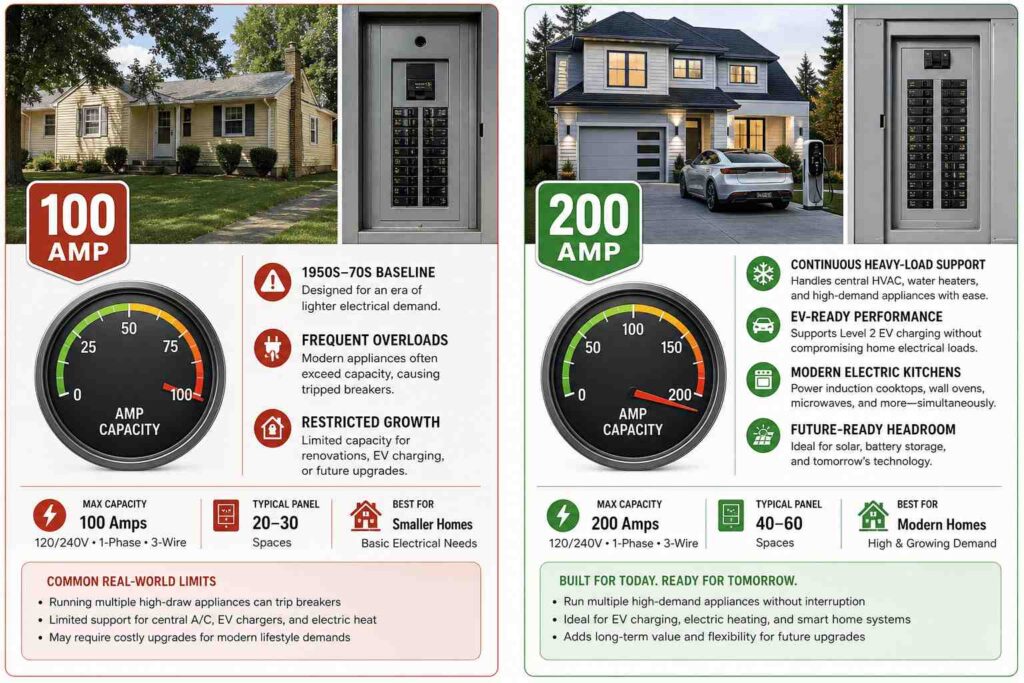
Amperage simply measures the total volume of electricity that can flow into your home’s main panel at any single moment. Understanding where your property sits on this scale makes it much easier to plan for future projects.
For most older 1950s through 1970s Glendora homes, the legacy standard was 100-amp service. This was fine for basic lighting, televisions, and standard kitchen gear, but it struggles significantly when running multiple heavy appliances together today.
By contrast, 200-amp service is the modern baseline standard for family homes and major remodels. It comfortably handles central HVAC systems, modern kitchens, and workshops, while also providing plenty of headroom for EV chargers and clean energy upgrades.
Understanding this capacity shift helps explain why so many homeowners benefit from a 100 amp vs 200 amp panel upgrade.
Real Scenarios: How Honest Diagnostics Save You Money
To see how thorough diagnostic work protects your wallet, take a look at two real-world examples we run into regularly in the local area:
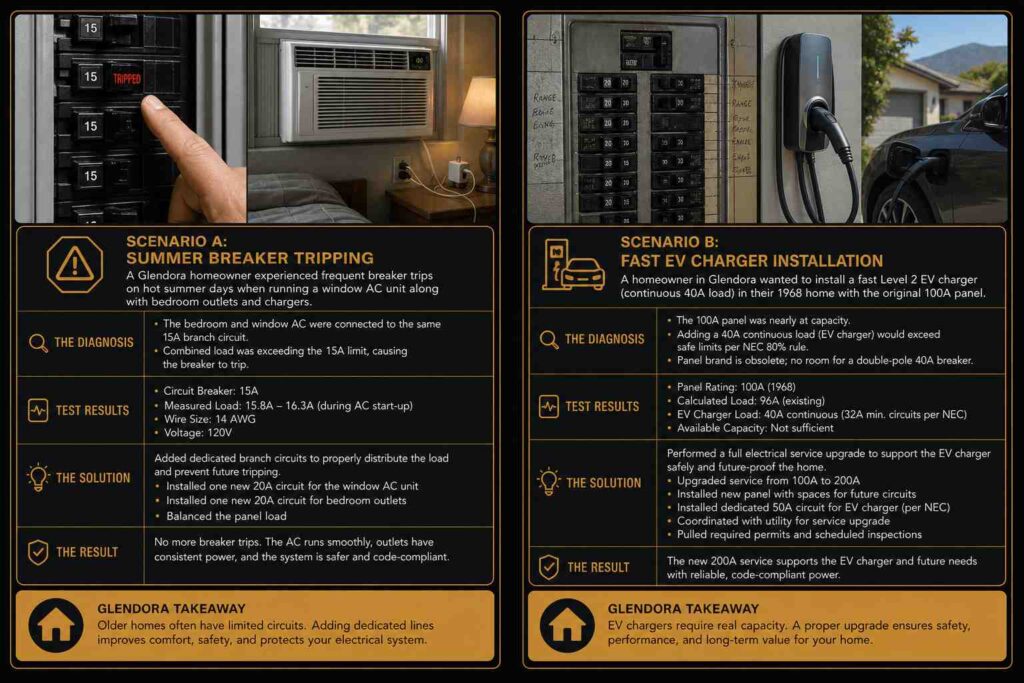
Scenario A: The Summer Afternoon Tripping Issue
A homeowner living near Foothill Boulevard was dealing with constant breaker trips every afternoon. They automatically assumed their entire 150-amp main panel was shot and were preparing to drop thousands of dollars on a full replacement.
What Diagnostics Revealed: A detailed load calculation and panel audit showed that the main box and overall service capacity were completely fine. The actual culprit? A previous DIY project had crammed a new living room window AC unit, a garage chest freezer, and all the master bedroom outlets onto one single 15-amp branch circuit.
The Solution: Instead of swapping out the entire main panel, we installed two new dedicated branch circuits using open slots in the existing box. That balanced the load and fixed the issue completely at a fraction of the cost.
Scenario B: Adding a Fast Vehicle Charger
A family near Glendora Village picked up their first electric vehicle and wanted a Level 2 fast charger installed in the garage. The house was still running on its original 100-amp service panel installed back in 1968.
What Diagnostics Revealed: Running a continuous 40-amp load for the vehicle charger on top of the home’s existing electric water heater and central air conditioning pushed the total draw way past safe limits defined by the National Electrical Code.
The Solution: A complete 200-amp panel upgrade was the right move here. We handled the utility service coordination with the power company and pulled proper permits with the City of Glendora, giving them a fast, safe charging setup that runs quietly overnight.
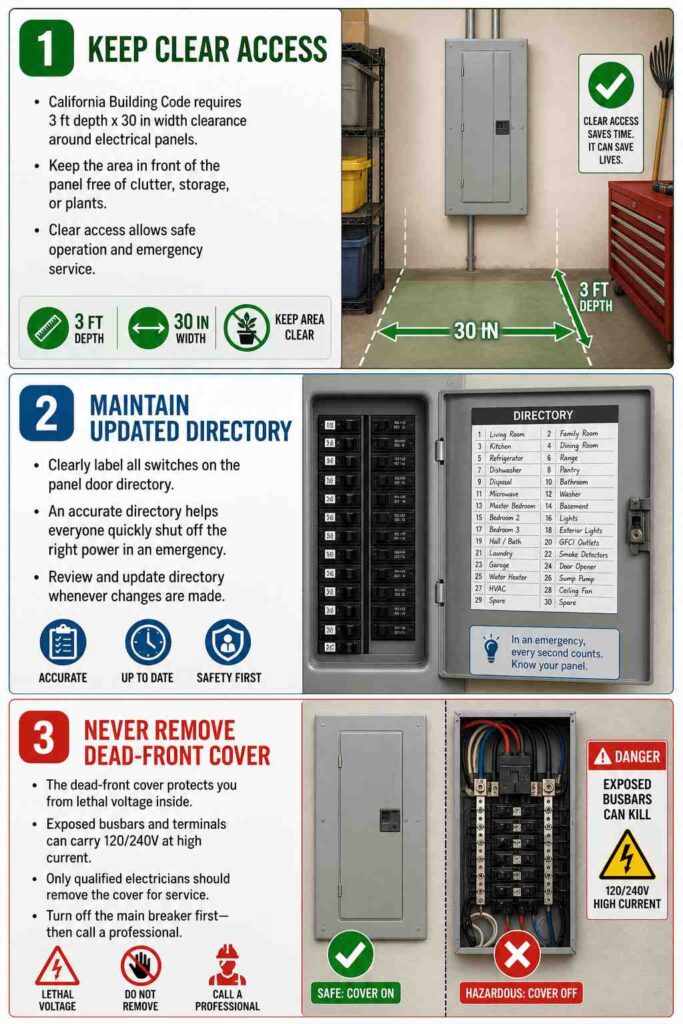
3 Practical Rules for Managing Your Home’s Power System
- Keep Clear Access to the Box: Resist the urge to stack storage boxes, hang shelving, or let landscaping grow over your breaker box. California Building Code requires a clear workspace around electrical equipment, typically 3 feet deep by 30 inches wide.
- Keep Your Circuit Directory Updated: Spend 15 minutes checking and clearly labeling every switch on your breaker door directory. Knowing exactly which switch controls what saves huge headaches during power outages or routine maintenance.
- Never Remove the Dead-Front Cover Yourself: You can flip tripped switches all you like, but leave the metal faceplate attached. The main service bars inside carry lethal voltage even when the main switch is flipped to off.
Conclusion
Your electrical panel isn’t just a grey metal box tucked away in the garage; it’s the core engine behind your home’s safety, everyday convenience, and long-term resale value. Spotting the signs of an overworked system early lets you fix issues before they turn into sudden outages or damage your sensitive electronics.
At Pro Electric Services Inc., our approach is straightforward: honest answers, clean workmanship, and fair evaluations. If a simple repair or circuit rebalance can solve your problem safely, that is exactly what we will recommend.
Dealing with flickering lights, mystery breaker trips, or planning some upgrades around your Glendora home? Give Pro Electric Services Inc. a call today to schedule a thorough, transparent home electrical safety inspection in Glendora.
Frequently Asked Questions
Most residential panel replacements take anywhere from 4 to 8 hours to complete. Your electricity will need to be turned off while our technicians dismount the old box, set the new panel, and reconnect all your branch circuits safely.
Yes, replacing a main electrical panel or upgrading your service amperage always requires an official city building permit and a final inspection. Pro Electric Services manages the entire process from pulling permits to meeting with city inspectors so you know your job is fully compliant.
Total costs depend on your home’s setup, whether the utility line coming from the street needs an upgrade, and how much capacity you are adding. Most standard residential electrical panel replacement costs run between $2,500 and $5,000+, and we always provide a detailed, itemized estimate before work begins.
Sub-panels are great if your main box has run out of physical space for new switches but still has plenty of unused amperage capacity. However, if your main service is already maxed out at 100 amps, adding a sub-panel will not bring any extra power into your home.
Fuse boxes rely on small glass fuses that melt to break the connection during an overload, meaning you have to screw in a brand-new fuse every time one blows. Modern breaker panels use mechanical switches that pop safely during a surge and can be reset with a simple flick of your finger.
A faint, low hum can happen naturally as alternating current flows through the equipment. But if you hear loud buzzing, persistent clicking, or sizzling sounds, you likely have a loose wire connection or a failing breaker switch that needs immediate professional attention.
Absolutely. A modern 200-amp panel is a strong selling point for buyers and home inspectors across Southern California. It proves that the home’s infrastructure is safe, up to code, and ready for modern appliances or EV chargers without requiring immediate repair work.
Check the manufacturer label on the inside of your panel door. Federal Pacific Electric boxes often feature bright orange switches on Stab-Lok breakers, while Zinsco panels typically use colorful red, blue, and green switches, and both brands have well-documented failure rates that should be checked by an electrician.
Yes, it can. Overloaded or aging panels often cause uneven voltage flows, power dips, and micro-surges across your home’s wiring. Over time, these fluctuating power levels wear down sensitive microprocessors in smart TVs, computers, and modern kitchen appliances.